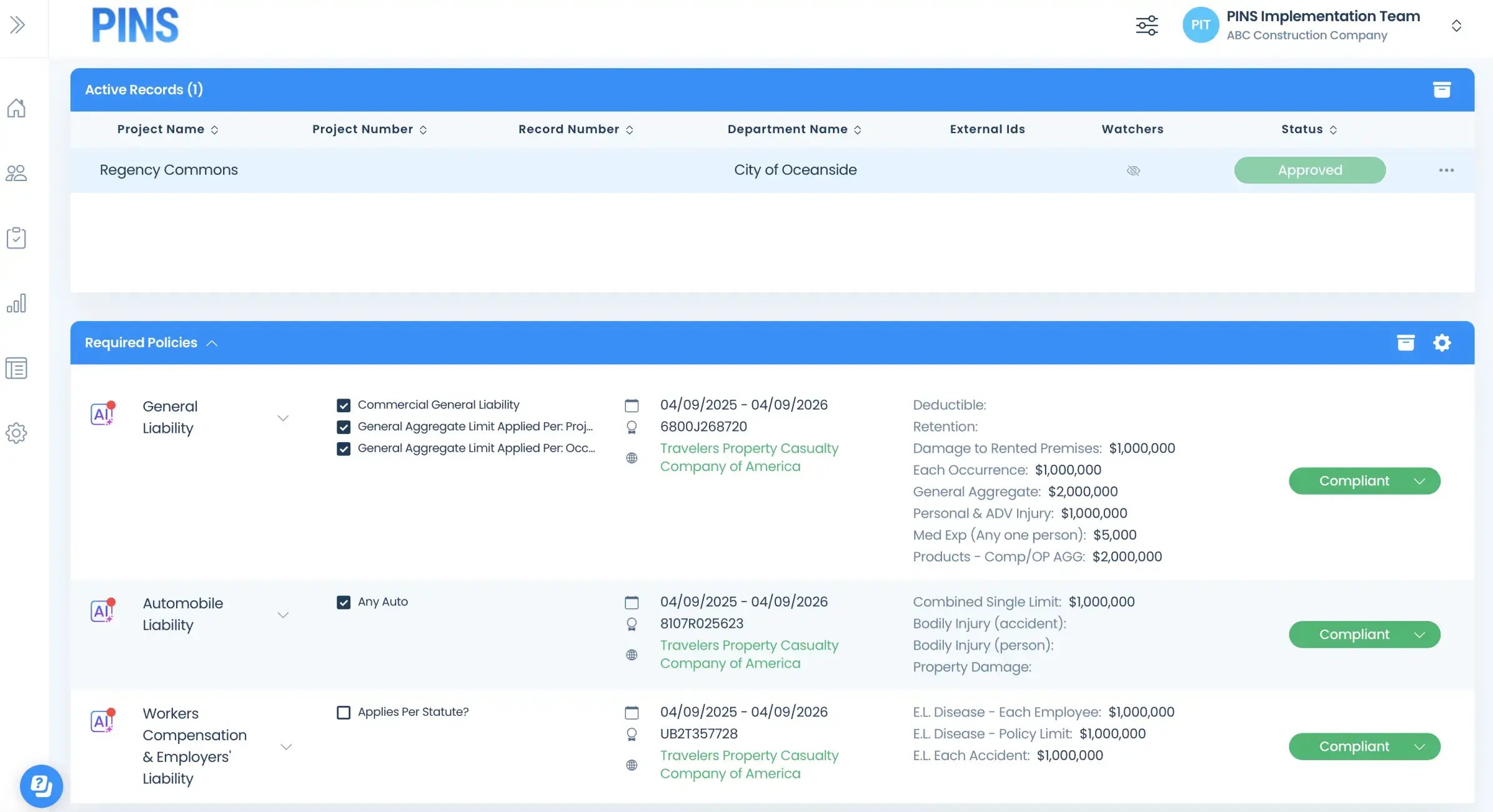
- Final decisions stay with your team
- Better fit for nuanced requirements and exceptions
- Fewer handoffs across the compliance process
- Automation without losing context or visibility
Best for teams that want control without the manual drag.
Competitor Comparison
Teams comparing PINS and Jones are usually deciding between two models: one that outsources day-to-day insurance review, and one that helps your team move faster while keeping approvals, waivers, and exception decisions in-house.
PINS is built for teams that want automation and visibility without giving up control of the process.
Quick comparison
The biggest difference is operating model. PINS is built for teams that want automation and visibility while keeping approvals, waivers, and exceptions in-house. Jones is built around a more outsourced review model, which can reduce some admin work but still creates handoffs when nuance or exceptions show up.
Best for teams that want control without the manual drag.
Better fit for teams willing to trade control for convenience.
Deep comparison
A side-by-side look at the workflow differences that matter once insurance review is actually live.
Automation with your team in control.
Outsourced, specialist-led review model.
Final decisions stay with your team.
Your team is still pulled in for exceptions
Your team keeps the context to respond directly.
Outsourced reviewers cannot always answer for your business.
Exceptions stay tied to your workflow and history.
Waiver handling can require later cleanup before renewal.
Renewals align more cleanly with active tracking.
Reminder flow can keep running unless renewals are manually handled.
Better fit for teams that want control without the admin drag.
For teams that prefer a more outsourced model.
Interface directly with your third parties
Introduces a middleman to the relationship with your tenants and vendors
The biggest difference is not whether insurance gets reviewed. It is whether your team keeps control once exceptions, renewals, and judgment calls show up.
Need help deciding?
Answers to the questions teams ask when comparing outsourced insurance review to a control-first software model.
The biggest difference is operating model. PINS helps your team automate collection, follow-up, and review support while keeping approvals, waivers, and exception decisions in-house. Jones is built around a more outsourced review model, which may reduce some admin work but still creates handoffs when nuance or exceptions show up.
Teams usually choose PINS when they want automation without giving up control. That means fewer handoffs, better visibility into what is happening, and a workflow where your team keeps the context needed to make decisions quickly and accurately.
PINS keeps third parties closer to the team that owns the requirements and decisions. That usually means less back-and-forth when something needs clarification. When a third-party review layer sits in the middle, vendors, tenants, or brokers can run into more friction when questions get nuanced.
Stop Reviewing.
Start Approving.