





In-house vs outsourced

Should you outsource COI tracking, or keep it in house?

Stop chasing renewals without losing control over compliance decisions. Use this guide to compare manual workflows, outsourced services, and in house automation.

Best fit for teams managing 100+ COIs per year.

Before you decide

Questions teams ask before they outsource

  • Should we outsource COI tracking so we can stop chasing renewals?
  • Will we lose control over waivers and exceptions?
  • Will subs and brokers get frustrated dealing with a third party?
  • If we keep it in house, do we have the bandwidth?
  • Is outsourcing actually cheaper at scale?

Next: the three options and what you trade off.

Compare approaches

The three options, and what you trade off

Most teams start manual. Some outsource for relief. The strongest programs keep decisions in house and automate the follow up.

Manual

Spreadsheets and inbox follow ups, fine until volume rises.

Best for: Low COI volume and simple requirements

  • Late expiration discovery
  • Constant chasing and email threads
  • Low compliance visibility across the organization
Tradeoff:
Control:
Speed:
Transparency:
Recommended

PINS

In house control, automated follow ups, faster compliance.

Best for: Teams that want risk control with automation

  • Automated renewal outreach and reminders
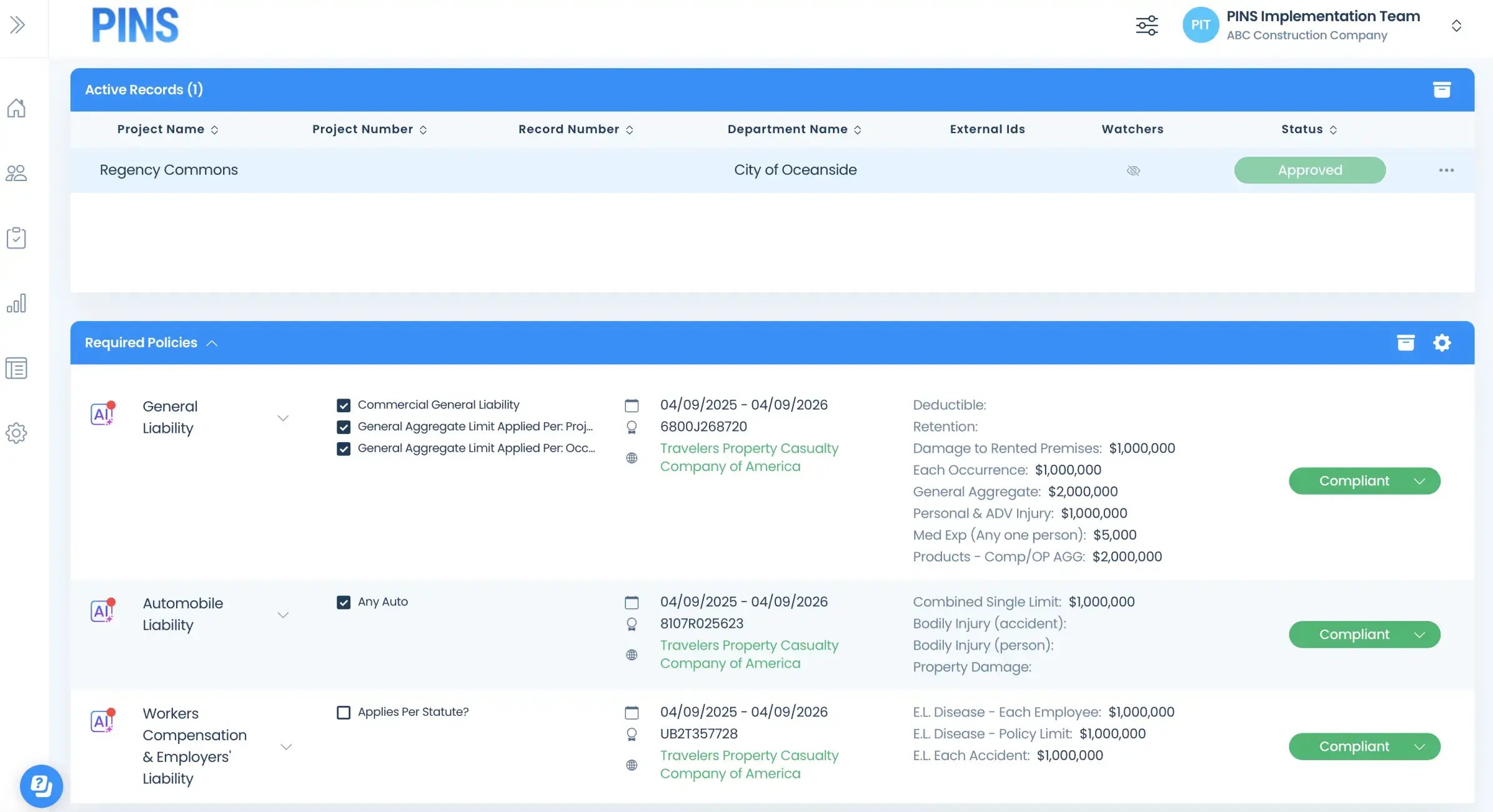
  • Real time compliance dashboard by project
  • AI assisted review with evidence
  • Your team keeps final approval
Tradeoff:
Control:
Speed:
Transparency:

Outsourced

Admin relief, but you trade visibility and control.

Best for: Teams prioritizing admin relief over risk management

  • Decisions happen outside your team
  • Slow communication and approvals delay work
  • Higher cost with limited transparency
Tradeoff:
Control:
Speed:
Transparency:

Outsourcing option

Should we outsource COI tracking?

Outsourced models like myCOI, Jones, or broker services can take COI requests and reviews off your plate, but the tradeoff is less visibility and less control when edge cases show up.

What you get

  • COI requests and follow ups handled for you
  • Reviews performed against stated requirements
  • Basic reporting, depending on provider

What still lands back on you

  • Limited chase attempts before escalation
  • Waivers and exceptions still need your approval
  • Less insight into communication and decision history
  • Subs deal with a third party, friction increases
  • Cost often scales per COI, typically 2x to 5x PINS

Outsourcing can reduce effort, but it also adds lag and removes the context your team needs to manage risk.

In house option

What if we keep it in house, without the admin drag?

PINS is built for self service risk control, your team keeps decisions in house while automation removes the chasing

Control stays in house

Decision ownership plus waiver and exception history stays tied to each third party.

Renewals become proactive

Automated outreach reduces late expirations that show up at site access or payment release.

Visibility stays current

Real time compliance view by project and location, so gaps do not hide in inbox threads.

85%+
less administrative time spent on COI management
90%+
third party compliance after implementing PINS

Stop Reviewing.

Start Approving.

Schedule Demo
Insured Profile Page showing insurance policies in compliant status-1