Last updated: October 12, 2026
COI tracking software pricing ranges from under $1 per vendor per month to managed service programs costing $50,000 or more annually. That range reflects fundamentally different operating models. Self-service software puts compliance in-house with automation. Managed service puts a third-party team in charge. Comparing price points without understanding which model you are evaluating is comparing different things.
What self-service software costs
Self-service COI tracking software typically costs between $1 and $25 per record per year. Volume drives the per-record rate down: teams managing 500 records pay less per record than teams managing 100.
The more important pricing question is what the base price actually includes. Endorsement language verification, configurable renewal sequences, and role-based permissions are core to any real compliance program. Some platforms include all of these by default. Others advertise a low entry price and charge separately for the features most programs actually need.
A platform priced at $15 per vendor per year that requires a plan upgrade to access endorsement review, configurable renewals, and role-based permissions is not a $15 product for most teams. Confirm what is included at the tier you are evaluating before comparing price points. The COI Tracking Software Evaluation Checklist covers the right questions to ask any vendor on pricing transparency.
What managed service costs
Managed service programs typically cost $50,000 to $100,000 or more annually. Teams switching to self-service software from managed service consistently see significant cost reductions. In some cases, teams have moved from over $70,000 per year in managed service fees to under $10,000 with an equivalent self-service program.
The price difference reflects the operating model. Managed service outsources compliance decisions to a third-party team. Self-service software automates the routine work while keeping every compliance decision with your team. For a full comparison of the two approaches, see In-House vs Outsourced COI Tracking.
How per-record pricing works
A record in PINS is equivalent to a contract or relationship being actively tracked, whether that is a subcontract, vendor agreement, or tenant lease. Each record holds unlimited documents. Multiple certificates, endorsements, and supporting documents all sit under one record without affecting price. Archived records do not count toward the active record total.
The pricing model matters because the alternative penalizes you for vendor behavior you do not control. A per-certificate or per-verification model charges each time a document is submitted or reviewed. When a vendor submits a non-compliant certificate, your team requests a correction, and the vendor resubmits, that is two or three billable events for one vendor relationship. The more follow-up a submission requires, the more it costs, which means the teams with the hardest-to-manage vendors pay the most.
Per-record pricing converts that variable cost to a fixed subscription. Every submission, review, and resubmission under an active record is included. The cost does not change based on how many attempts it takes to get a compliant certificate.
What PINS costs
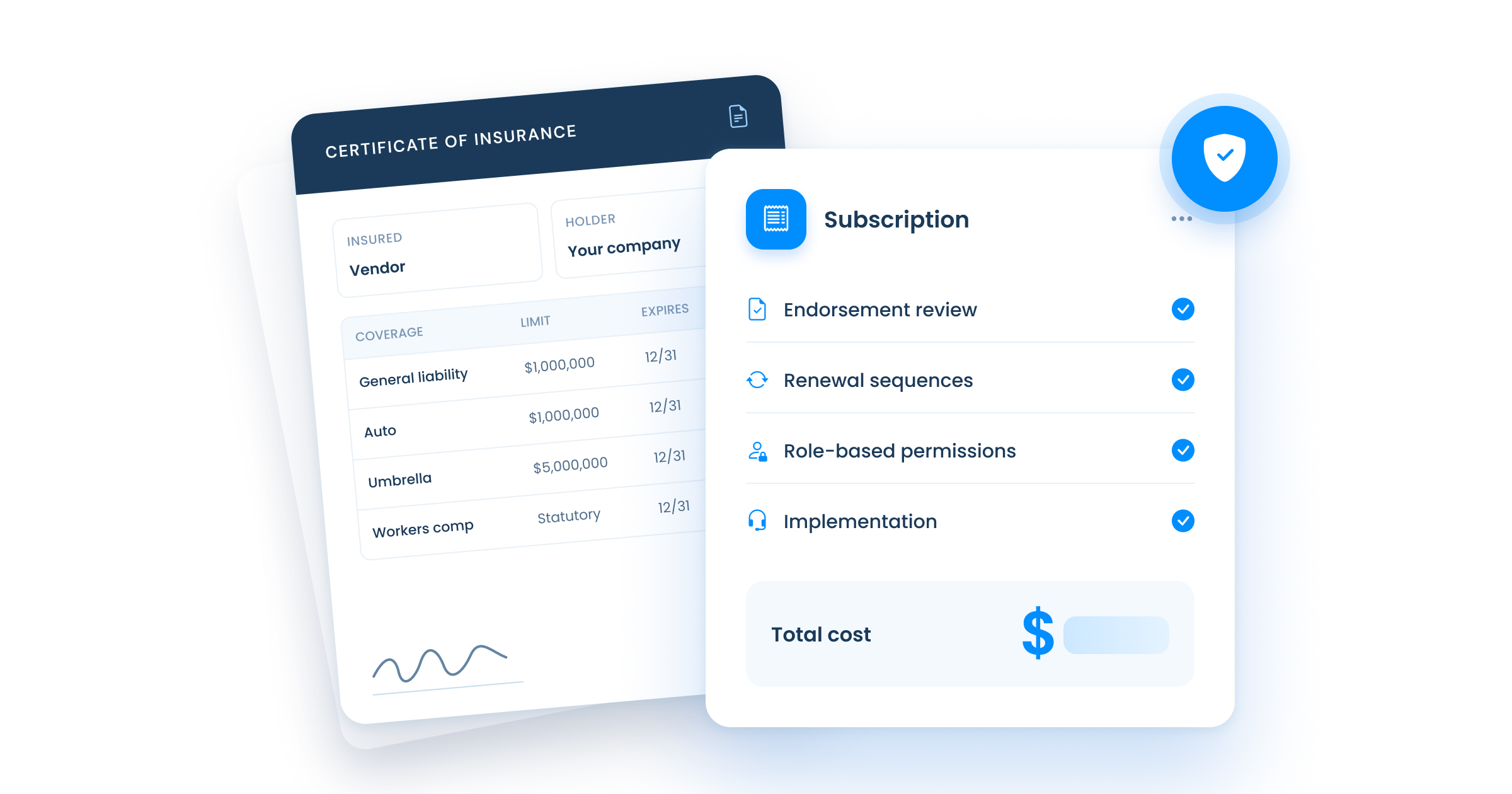
PINS pricing is based on active records. Most customers pay between $10 and $15 per active record per year. The full COI compliance workflow is included in the base price: AI-assisted endorsement review, configurable renewal sequences, role-based permissions, and white-glove implementation. Procore and Vista integrations are available as add-ons.
Morley Builders reduced expired notice management from two days to five minutes. C.W. Driver achieved the same result. The time savings alone typically exceed the annual subscription cost in the first year.
Request pricing here based on your vendor count and program requirements.
For questions to ask any vendor before comparing quotes, download the COI Tracking Software Evaluation Checklist.
Frequently asked questions
How much does COI tracking software cost per vendor?
Self-service platforms with a full compliance workflow typically cost between $10 and $20 per active record per year. Entry-level platforms start lower but often require plan upgrades to access endorsement review, configurable renewals, and role-based permissions. Managed service programs cost significantly more, often $50,000 to $100,000 or more annually. The per-vendor price is only meaningful after confirming what is included in the base tier versus what requires an upgrade or add-on.
What is the difference between self-service and managed COI tracking pricing?
Self-service pricing covers the platform. Your team manages compliance in-house with automation handling collection, renewal reminders, and document review. Managed service pricing covers a third-party team doing that work on your behalf. Managed service typically costs five to ten times more than self-service at equivalent vendor volume. The operating model difference, in-house control versus outsourced decisions, is as important as the price difference.
What should be included in the base price of COI tracking software?
AI-assisted document review, configurable renewal sequences, role-based permissions, exception and waiver logging, and audit-ready reporting should all be in the base price. Endorsement language verification, confirming that the actual endorsement documents meet your contract requirements, should also be included without requiring a plan upgrade. Confirm what is included at the tier you are evaluating before comparing price points across vendors.
How does per-record pricing differ from per-verification pricing?
Per-record pricing charges based on active contracts or relationships, regardless of how many documents are submitted under each one. Renewals, updated endorsements, and supporting documents are all included within the per-record subscription. Per-verification pricing charges each time a document is submitted or reviewed, creating variable costs that increase with submission volume. For teams with active vendor bases and frequent certificate activity, per-record pricing is typically more predictable and cost-effective.
How do I compare COI tracking software pricing across vendors?
Confirm the pricing model first as per-record, per-vendor, and per-verification are not directly comparable. Then confirm what is included in the base price versus what costs extra. Get quotes at your actual vendor volume since per-record costs typically decrease at higher volumes. Factor in implementation cost, which some platforms charge separately and others include. A lower per-record price with significant add-on and implementation fees can be more expensive in total than a higher base price that includes the full workflow.