One airport, dozens of agreement types
Leases, concessions, permits, operating agreements, and construction contracts all carry different requirements. A single spreadsheet cannot hold them all accurately.
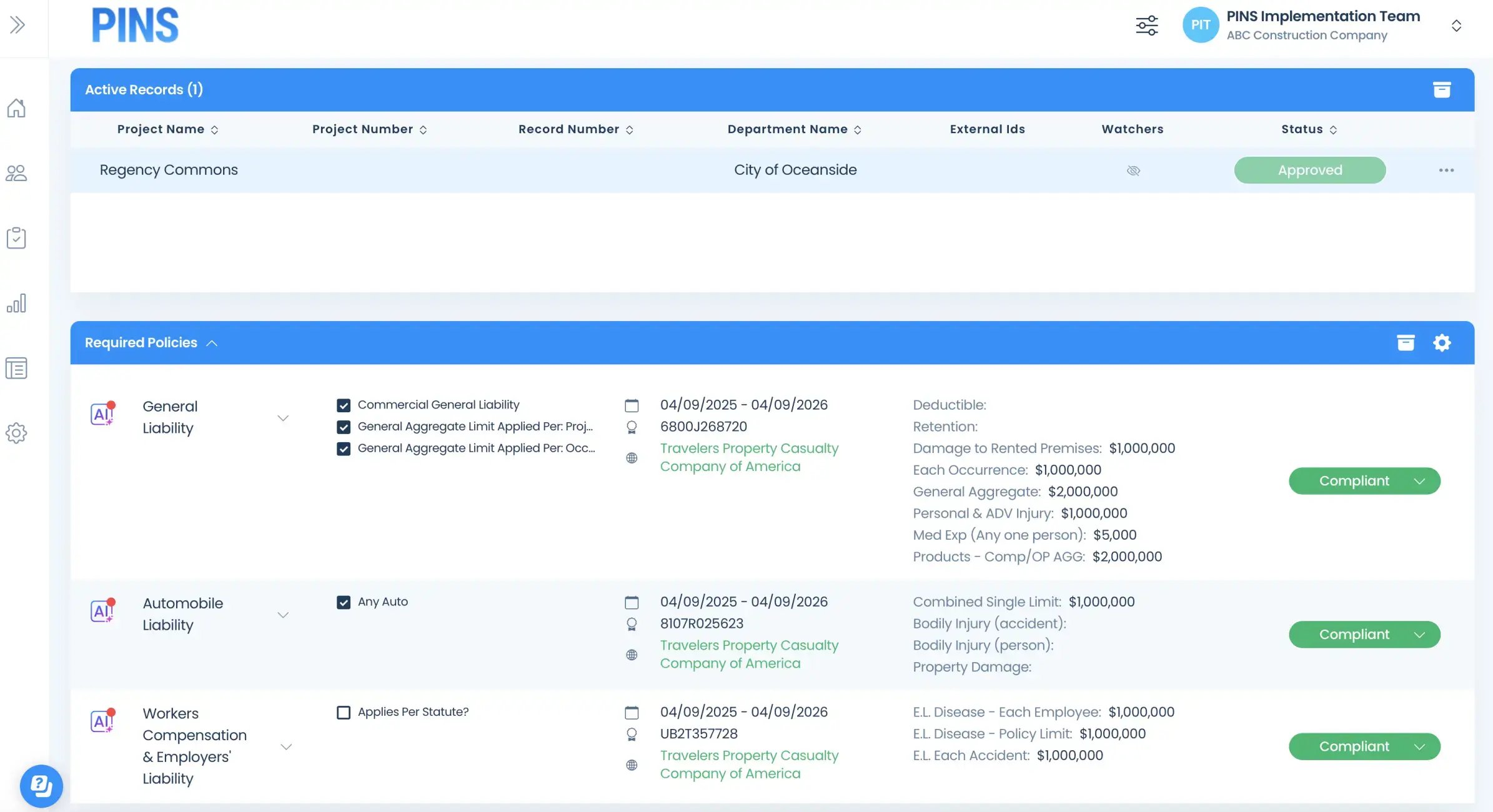
Airport COI tracking software collects, reviews, and tracks certificates of insurance for every tenant, concessionaire, contractor, and airside operator under one compliance program.
PINS keeps that program in-house. AI-assisted review and automated renewals do the repetitive work. Your risk team makes final decisions.
Trusted by airport risk teams
| Agreement type | Commonly required coverage |
|---|---|
| Terminal and office leases | General liability, property, workers compensation and employer’s liability, auto liability if vehicles are used on airport |
| Food, beverage, and retail concessions | General liability with products coverage, liquor liability where alcohol is served, property, workers compensation |
| Ground transportation permits (taxi, TNC, shuttle, rental car) | Commercial auto liability at higher limits, general liability, workers compensation |
| Fuelers, into-plane, and ground handlers | Airport or aviation liability, airside auto liability at higher limits, pollution liability, workers compensation |
| FBOs and hangar lessees | Aviation premises liability, hangarkeepers liability, property, pollution liability |
| Construction contractors | General liability, auto liability, workers compensation, umbrella, pollution liability as needed, often under an OCIP or CCIP |
| Consultants and professional services | Professional liability, general liability, workers compensation |
Most airport agreements require more than a certificate.
Common breakdowns
Airports manage more agreement types than almost any other organization. Each one carries its own requirements, its own renewal cycle, and its own owner inside the airport.
Leases, concessions, permits, operating agreements, and construction contracts all carry different requirements. A single spreadsheet cannot hold them all accurately.
A fuel handler on the ramp and a retail tenant in the terminal do not need the same coverage. Airside operators often need higher auto limits, aviation liability, or pollution coverage.
Contractors, subcontractors, and consultants on capital projects add another layer of requirements on top of tenant and vendor compliance.
Insurance is collected at signing. Then the lease runs for years.
Waivers and one-off approvals get made in email.
Public airports answer to auditors, boards, and the public.
Customer story
Los Angeles World Airports runs LAX and Van Nuys, with major capital improvement projects underway alongside daily operations.
Utilizing PINS has allowed us to effectively keep up with insurance information for thousands of vendors and contractors working at/for LAWA. ... Without PINS, it would be virtually impossible to track their insurance coverage with any measure of reasonable timing and accuracy.
PINS has allowed LAWA to function effectively, maintain a system of document control and respond in a timely manner utilizing only a two-person team.
How PINS works
Tenants, concessionaires, contractors, and brokers submit through a secure upload link. No login required.
Our AI COI review reads every certificate and endorsement, including additional insured and waiver wording, and identifies issues. Your team decides what happens next.
Automated reminders and follow-up keep coverage current on agreements that run for years. Every approval, waiver, and exception is logged for audit.
Spreadsheets and email managed by your own team.
Airports with a small number of agreemets
Your team keeps control. Automation handles collection and renewals
Airport risk teams managing many agreement types in-house
A third-party collects and reviews documents for you
Teams that want to hand off the work entirely
FAQ
Answers for airport risk teams managing insurance across tenants, concessionaires, contractors, and airside operators.
Airport COI tracking software collects, reviews, and tracks certificates of insurance for the third parties that operate at an airport. That includes tenants, concessionaires, contractors, ground transportation providers, and airside operators. PINS lets airport risk teams run that program in-house, with automation handling collection, review support, and renewals.
Most airports start with spreadsheets and email, then move to software as agreement volume grows. The core work is the same either way: set requirements by agreement type, collect certificates and endorsements, review them against requirements, and track renewals. PINS automates collection, review support, and renewals while your team keeps approval authority.
No. AI-assisted review checks certificates and endorsements against your requirements and returns findings with the reasoning linked. Your team approves, rejects, waives, or overrides every item. Every decision is logged with who made it and when.
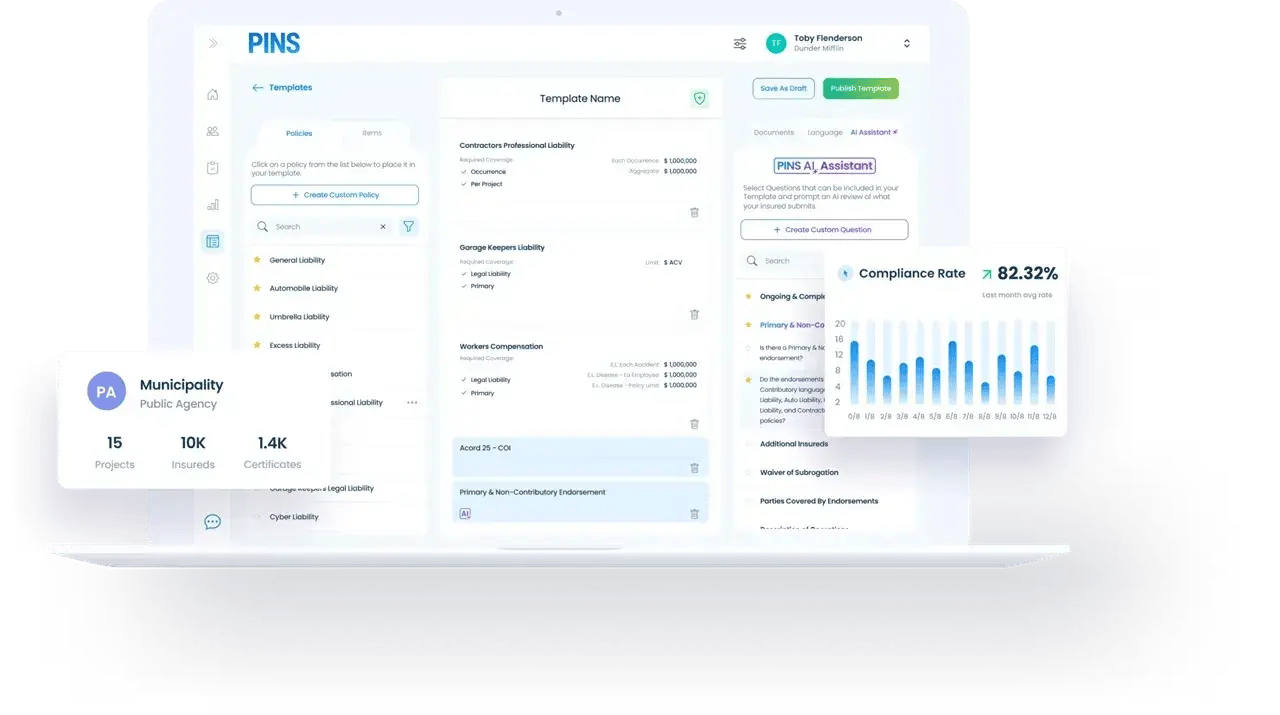
Yes. Each agreement type gets its own requirement template, so a fuel handler and a terminal retailer are reviewed against different standards. Templates cover limits, coverage types, and endorsement wording. Your team can adjust a template as requirements change.
PINS tracks every expiration date and sends renewal notices automatically until updated insurance is received. Waivers and exceptions are tied to the agreement they apply to, with a record of what was accepted, who approved it, and when. That history is searchable, so audit prep does not depend on digging through email.
No. Tenants, vendors, and brokers upload documents through a secure link with no login required. Less friction means faster collection and fewer follow-up calls.
Stop Chasing COIs.
Start Approving.